
Last updated November 15, 2026
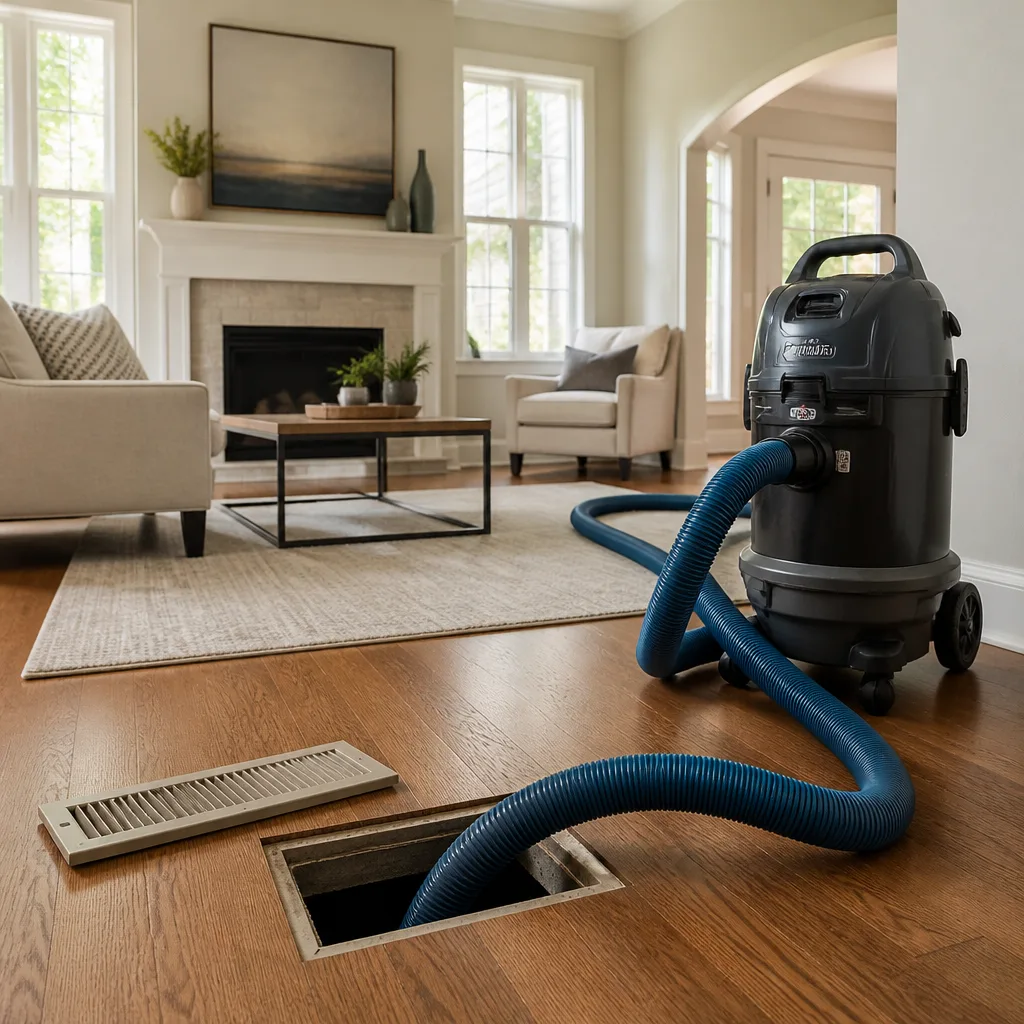 Whole-home duct cleaning
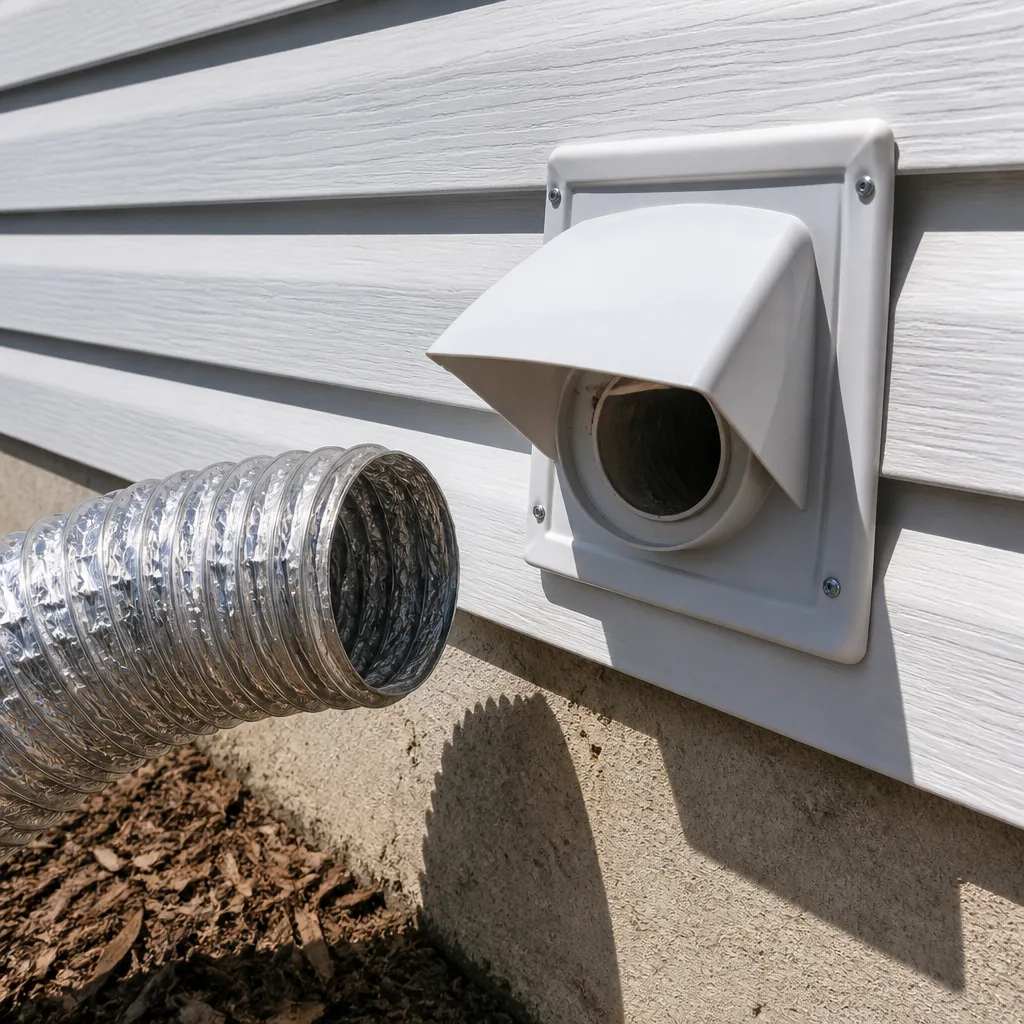 Dryer vent cleaning
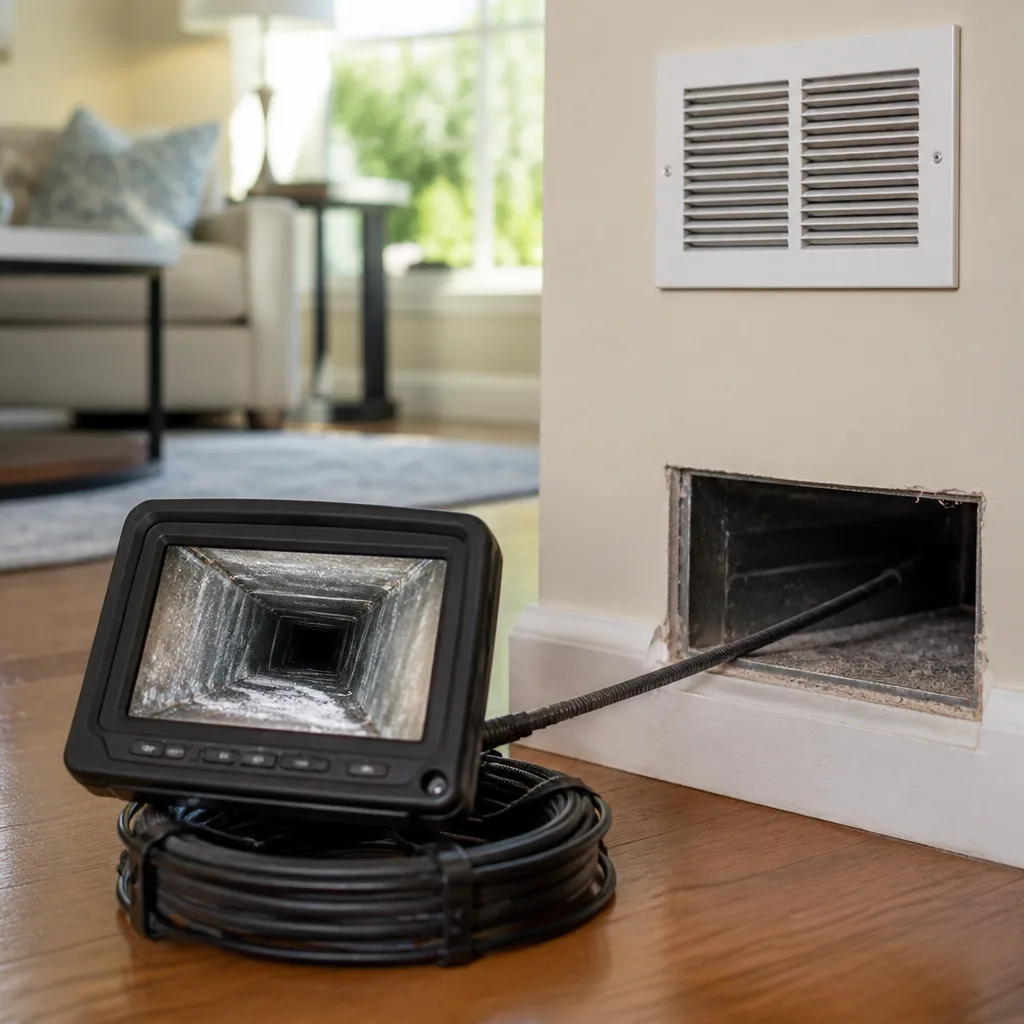 Camera inspection
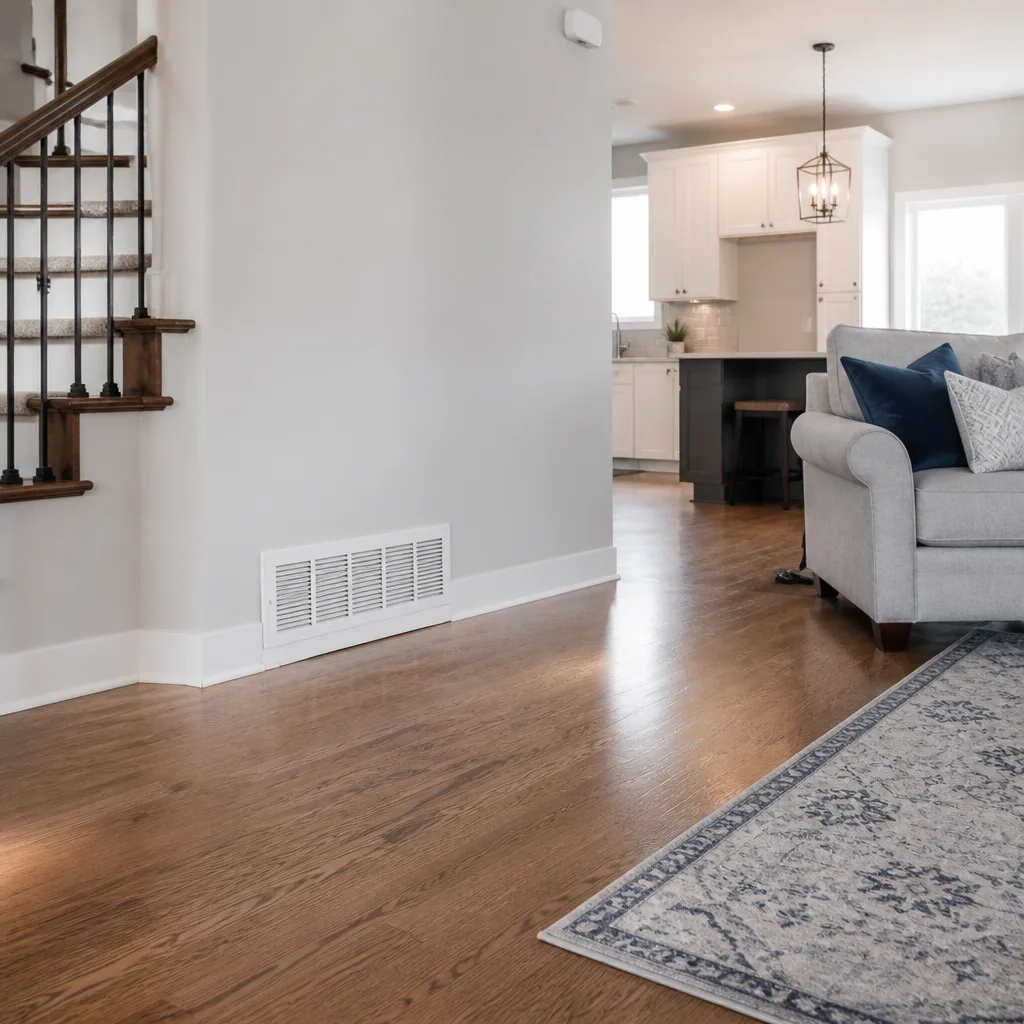 Sanitizing & deodorizing
Whole-system duct and dryer vent check with before-and-after photos - you see exactly what came out of your vents
That "$99 whole-house special" is a bait ad - the real number appears once they are in your hallway, or the "clean" is a shop-vac at the register. We photograph the inside of your ducts before and after instead.
Air Duct Cleaning Permits, Codes & Inspections in Bellevue, WA: What You Need to Know
No permit is needed to clean your ducts. But the moment a company disconnects, cuts, reroutes, or replaces a section of ductwork, that work stops being cleaning and becomes a mechanical modification, and Washington’s mechanical code applies. Most homeowners never hear that line get crossed. They hire one company for a cleaning, get talked into “while we’re in there” repair work, and end up with an unpermitted alteration buried above a ceiling. It surfaces years later during a home inspection, and it follows the seller to the negotiating table. This guide explains where cleaning ends and permitted work begins in Bellevue, what the state code and the city building department actually require, how inspectors find unpermitted duct changes, and the exact questions to ask a contractor who offers both cleaning and repair.
Quick Answer
Air duct cleaning alone does not require a permit in Bellevue, Washington. But repairing, modifying, replacing, or rerouting ductwork is mechanical work governed by the Washington State Mechanical Code (WAC 51-52) and generally requires a permit from the City of Bellevue and a licensed mechanical contractor. If one company handles both cleaning and repair, verify the licensing and permit path for the repair portion before any duct is cut.
Styles & brands we work with
- Whole-home duct cleaning
- Dryer vent cleaning
- Camera inspection
- Sanitizing & deodorizing
Table of Contents
- Do You Need a Permit to Clean Air Ducts in Bellevue?
- What Washington’s Mechanical Code (WAC 51-52) Says About Duct Work
- How the City of Bellevue Building Department Treats HVAC Work
- Cleaning Scope vs. Repair Scope: Concrete Examples
- How Unpermitted Duct Modifications Surface During a Home Inspection
- Why Bellevue’s Climate and Housing Make Duct Condition Matter
- What to Ask a Contractor Who Offers Both Cleaning and Repair
- How a Compliant Cleaning-and-Repair Visit Should Run
Do You Need a Permit to Clean Air Ducts in Bellevue?
No. Cleaning the interior of an existing duct system is maintenance, not construction, and the City of Bellevue does not issue permits for maintenance cleaning. A technician can run a rotary brush through your supply and return runs, pull the debris out under negative pressure, and leave the system’s physical configuration exactly as it found it, and no inspection is involved at any point.
The distinction matters because the two services are often sold together, and the words sound interchangeable to a homeowner. They aren’t. Cleaning removes what’s inside a duct. Repair changes the duct itself. One is maintenance. The other is construction work with a paper trail.
Think about what a repair actually involves. A crushed flex run gets replaced. A disconnected joint gets resealed. A sagging trunk line gets re-supported or rerouted. A return that was undersized from the start gets rebuilt. Each of those changes the mechanical system of the house. In most jurisdictions, and in Bellevue specifically, that’s permit territory.
- Cleaning only: no permit, no inspection, no licensed mechanical contractor required by the code for the cleaning act itself.
- Cleaning plus repair: the repair portion is mechanical work and typically needs a permit and a licensed contractor.
- Full replacement or rerouting: definite permit work, and the plans may be reviewed before the permit is issued.
If a company tells you a permit is never needed for “anything duct-related,” that’s your signal to ask more questions. In our experience, the honest answer is always “it depends on whether we’re cutting.”
What Washington’s Mechanical Code (WAC 51-52) Says About Duct Work
The Washington State Mechanical Code, adopted under WAC 51-52, is the state’s version of the model mechanical code and it governs the installation, alteration, repair, replacement, and maintenance of mechanical systems, including ductwork. Cleaning falls under maintenance and sits largely outside the permit framework. Alteration, repair, and replacement do not.
Here’s the practical read for a homeowner in Bellevue. The code cares about three things when ductwork changes: that the work is done to a recognized standard, that the person doing it is qualified, and that the change is documented. A cut-and-seal job on a disconnected joint in a crawlspace or a replaced flex run feeding a bedroom register is small in square footage but large in consequence if it’s done wrong. A poorly sealed joint pushes conditioned air into the attic or wall cavity instead of the room. That’s a comfort problem, an energy problem, and eventually a moisture problem in a climate that stays damp through much of the year.
The code also sets material and support expectations. Sealants need to be rated for the application. Duct support spacing matters. Flexible duct with too much slack or too sharp a bend restricts airflow and creates a place for debris and moisture to collect. None of this is exotic; it’s standard mechanical practice. But standard practice requires a permit when the work crosses from cleaning into modification.
Ventilation is part of the same chapter. Bath fans and range hoods ducted to the exterior are mechanical ventilation, and altering that duct path is mechanical work. That includes dryer exhaust, which brings us to dryer vent cleaning and why the vent line deserves the same scrutiny as the HVAC runs. A clogged or crimped dryer vent is a fire hazard, and a rerouted one without a permit is an unpermitted mechanical change.
One caveat worth stating plainly: code interpretations shift, and local amendments happen. If your situation involves anything beyond cleaning, confirm the current requirement with the City of Bellevue before work starts rather than relying on a forum post or a contractor’s word.
How the City of Bellevue Building Department Treats HVAC Work
The City of Bellevue’s building department issues mechanical permits for HVAC work within city limits, and the permit process is the paper trail that protects you at resale. The department looks at the scope of work, the value, and whether the person pulling the permit is licensed for that scope. For mechanical work, that means a licensed mechanical contractor.
What that looks like in practice:
- Determine the scope. Is it cleaning, or is any part of a duct being cut, replaced, or rerouted? Cleaning-only skips the permit step entirely.
- Confirm the contractor’s license. A company performing mechanical work in Bellevue needs to be a licensed contractor in Washington with the appropriate registration. Ask for the license number and verify it with the state, not just on a business card.
- Pull the permit before work begins. Permits are issued before the work, not after. A contractor who offers to “handle the paperwork later” is a contractor who may never handle it.
- Schedule the inspection. Depending on the scope, the city may require an inspection of the completed mechanical work. The inspector checks support, sealing, material, and that the installation matches what was permitted.
- Keep the documentation. Permit number, inspection sign-off, and the contractor’s invoice should go in your home records. They’re what a buyer’s agent will ask for.
Bellevue is a permit-conscious city. Its housing stock ranges from mid-century ranch homes in neighborhoods like Crossroads and Lake Hills to newer construction in the Spring District and Downtown, and the building department sees all of it. Mechanical permits are routine there. That’s actually good news for a homeowner: the process is well-worn, and a licensed contractor knows the path.
What the city does not do is hunt for unpermitted cleaning. Nobody inspects a brush job. The enforcement lives at resale, in the inspection report, which is why the next section matters.
Cleaning Scope vs. Repair Scope: Concrete Examples
The line between cleaning and repair is easier to hold once you’ve seen both sides of it. Here are real categories of work, sorted by which side they fall on.
Cleaning-scope work (no permit)
- Rotary brushing the interior of supply and return runs
- HEPA-vacuuming plenums, boots, and register interiors
- Cleaning the blower compartment and coil face without disconnecting duct
- Removing debris from register covers and grilles
- Sanitizing the interior surfaces of an intact system
Repair-scope work (permit may apply)
- Replacing a section of torn or crushed flexible duct
- Reconnecting a joint that has separated and resealing it properly
- Rerouting a run to clear an obstruction or improve airflow
- Adding, removing, or resizing a supply or return branch
- Rebuilding a deteriorated trunk line or plenum connection
- Altering the path of a dryer exhaust or bath fan duct
The tricky part is that some repairs hide inside a cleaning. A technician running a brush through a run finds a disconnected joint behind a wall and offers to seal it. That offer is genuinely helpful. It’s also mechanical work, and whether it needs a permit depends on what’s being changed. A simple reseal may or may not require one depending on the scope; a replaced run almost certainly does. The point is that the contractor should be the one raising the question, not you.
This is where equipment matters too. A cleaning that uses proper containment, like the negative air pressure setup we run with Abatement Technologies gear, keeps dislodged debris from spreading through the house. That’s cleaning-scope work done right. If the same visit turns up a duct that needs structural repair, the right move is to document it, explain the permit path, and schedule the repair as repair. We repair what others walk past, but we do it through the proper channel.
How Unpermitted Duct Modifications Surface During a Home Inspection
Home inspectors find unpermitted duct work in predictable ways, and once you know the tell-tales, you’ll spot them in your own house. These are general observations, not reports on any particular home, but the patterns repeat.
- Inconsistent materials. A run of shiny new flex duct spliced into an older rigid trunk. Inspectors note the mismatch because it suggests recent, undisclosed work.
- Sloppy connections. Unsealed joints, foil tape alone where mastic was needed, or flex duct compressed at a sharp bend to fit a tight space.
- Missing support. Duct sagging between hangers, usually because a section was replaced without restoring the supports.
- Disconnected runs. A branch that feeds nothing, or a boot that’s popped loose behind drywall. Common when someone rerouted a line to make room for something else.
- No documentation. Owners can’t produce a permit number for an obvious alteration. That’s the single loudest signal.
What it costs a seller is time and leverage. An inspector flags unpermitted mechanical work, the buyer’s agent asks for documentation, and now the seller is either chasing down paperwork for work done years ago or paying a licensed contractor to correct and permit it during a transaction. That’s the worst possible time to be scheduling trades. The house is under contract, the clock is running, and the seller is negotiating from a weak position. It doesn’t matter that the original repair was well-intentioned. What matters is that it can’t be shown to be compliant.
For buyers, the inverse is true. An inspection report that notes unpermitted duct work is a negotiating point. It’s also a genuine reason to look closer at the rest of the mechanical system, because if the ducts were altered without permits, the question becomes what else was.
Why Bellevue’s Climate and Housing Make Duct Condition Matter
Bellevue sits on the east side of Lake Washington, and its climate is mild but damp. That combination is gentle on equipment and hard on anything that traps moisture. Ductwork in a conditioned house stays dry as long as it’s sealed and insulated. A disconnected joint or a crushed run lets warm, moist air into a crawlspace or wall cavity, where it cools, condenses, and feeds mold over time. In a climate with a long wet season, that cycle is the difference between a system that lasts and one that develops problems.
Housing stock plays in too. Older homes in neighborhoods like Crossroads, Lake Hills, and the older parts of Redmond-adjacent Bellevue often have duct systems that were built for a different era of HVAC and have since been modified, extended, or patched to accommodate a heat pump or a remodel. Newer builds downtown and in the Spring District are tighter and better sealed, but they run into different issues when something goes wrong, since the ducts are often buried in chases that are hard to access. City name aside, the point is universal: the ducts are only as good as their weakest connection.
For a Bellevue homeowner concerned about indoor air quality, especially with a family member who has allergies or respiratory sensitivities, that matters. Contamination isn’t only what’s sitting in the duct. It’s also what’s leaking out of or into it. A properly sealed system and a proper air duct cleaning address different parts of the same problem. We work with Honeywell and Aprilaire filtration products for the same reason: filtration only performs as well as the ductwork feeding it.
What to Ask a Contractor Who Offers Both Cleaning and Repair
This is the part that protects you most. A company that advertises cleaning and repair in the same visit is offering a good service mix, but it’s also a company that can cross the permit line mid-job. Ask these questions before anyone opens the equipment cases at your Bellevue home.
- Are you licensed to perform mechanical work in Washington? Cleaning doesn’t require it. Repair does. Get the license number and verify it with the state.
- For this repair, does it require a permit from the City of Bellevue? A straight answer that includes “it depends on the scope, and here’s how we’d determine that” is better than a flat yes or no.
- Who pulls the permit, and will I get the number and inspection documentation? The answer should be clear and should not involve you chasing anyone.
- Can you show me what you found? Before-and-after photos of your own ducts, not stock images. Ask for photos of the failed connection or damaged run before it’s repaired.
- What’s the price for the repair as a separate line item? One flat price agreed before work starts, written down, separate from the cleaning. No per-vent pricing and no teaser figure that grows once the van is parked.
- What equipment are you using? The answer should be specific: a Rotobrush rotary brush system for agitation, a HEPA-rated vacuum or Nikro system for capture, and containment. If the answer is “a shop vac,” you’ve learned enough.
- Can I see the written estimate before you begin? Yes is the only acceptable answer. The written estimate sets the final price.
A contractor who offers cleaning and repair under one roof, with proper licensing and documentation, is genuinely the easier call. One company, one account of the work, one set of records. The questions above just make sure the easier call is also the legal one.
How a Compliant Cleaning-and-Repair Visit Should Run
Here’s what the sequence should look like when the work is done right, from the first phone call to the final walkthrough. This is also a fair description of how a typical visit to a Bellevue home runs when both cleaning and repair are on the table.
- Estimate in writing. You get a scope that separates cleaning from any repair work, with a flat price for each. No surprises once the equipment is out.
- Inspection before cleaning. A technician walks the system, checks accessible runs and connections, and notes anything that looks compromised. Before-and-after photos get taken of the system at this stage.
- Containment setup. Negative air pressure and containment at the source keep dislodged debris from redistributing into the living space. This is the part that separates a real job from a cosmetic one.
- Cleaning. The rotary brush agitates the duct surfaces while the HEPA-rated vacuum captures the loosened material. Every register and return gets covered.
- Repair findings and permit conversation. If a failed connection or damaged run turns up, you get told before it’s touched. The permit question gets answered explicitly. The repair is priced separately and scheduled.
- Repair and documentation. Permitted work gets done by a properly licensed contractor, the permit number goes in your records, and the repair gets photographed.
- Walkthrough. You review the before-and-after photos and the scope, and you sign off on the work with the records in hand.
That’s the flow when the company has the equipment and takes the paperwork seriously. If a visit skips step one or step five, those are the two to push back on. Those are the steps that turn a cleaning into a documented, resale-friendly piece of work.
Common Mistakes to Avoid
- Assuming “duct work” all requires a permit. Cleaning doesn’t. Confusing the two leads homeowners to over-pay for permits they don’t need or under-document repairs they do.
- Assuming “duct cleaning” never requires a permit. The opposite mistake, and the more common one in Bellevue. A repair sold as cleaning is still a mechanical alteration.
- Letting a repair get done mid-cleaning without a scope change. If the technician finds a problem and offers to fix it for “a little more,” ask whether a permit applies and get the repair in writing as its own line item.
- Not asking for the license number. Cleaning-scope work doesn’t demand a mechanical license. Repair work in Bellevue does. If the same company is doing both, verify it before the duct is opened.
- Skipping the before-and-after photos. A photo of your own duct, before and after, is the only real proof the work happened. Photos taken in someone else’s house are marketing.
- Not keeping the paperwork. Permit number, inspection sign-off, and the written estimate should go with your home’s records. That file is what a buyer will want to see, and it’s the strongest answer to an inspector’s question.
- Hiring on price alone in a Bellevue market that rewards documentation. A cheap quote on duct work is often a cheap job on duct work. Ask what equipment will be on site and what happens when the contractor finds a repair.
See the difference
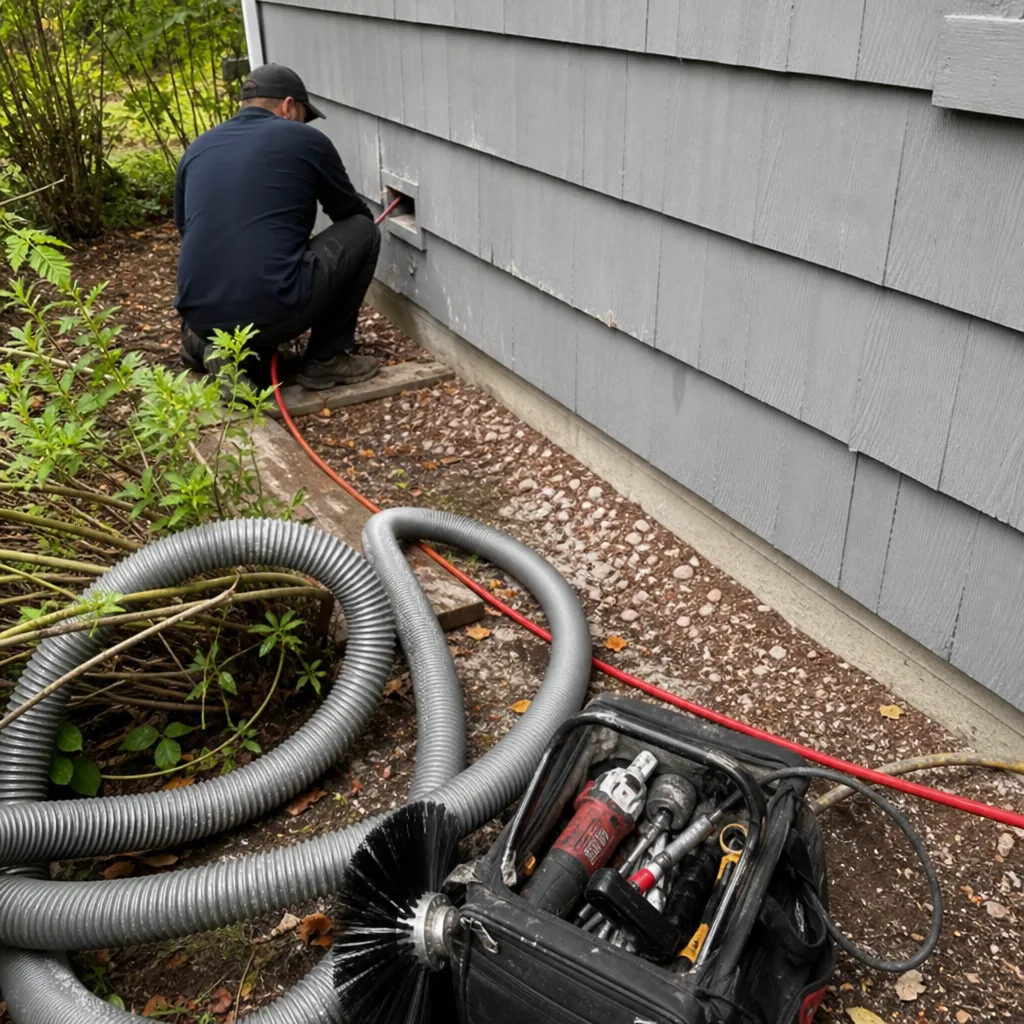 Before
 After
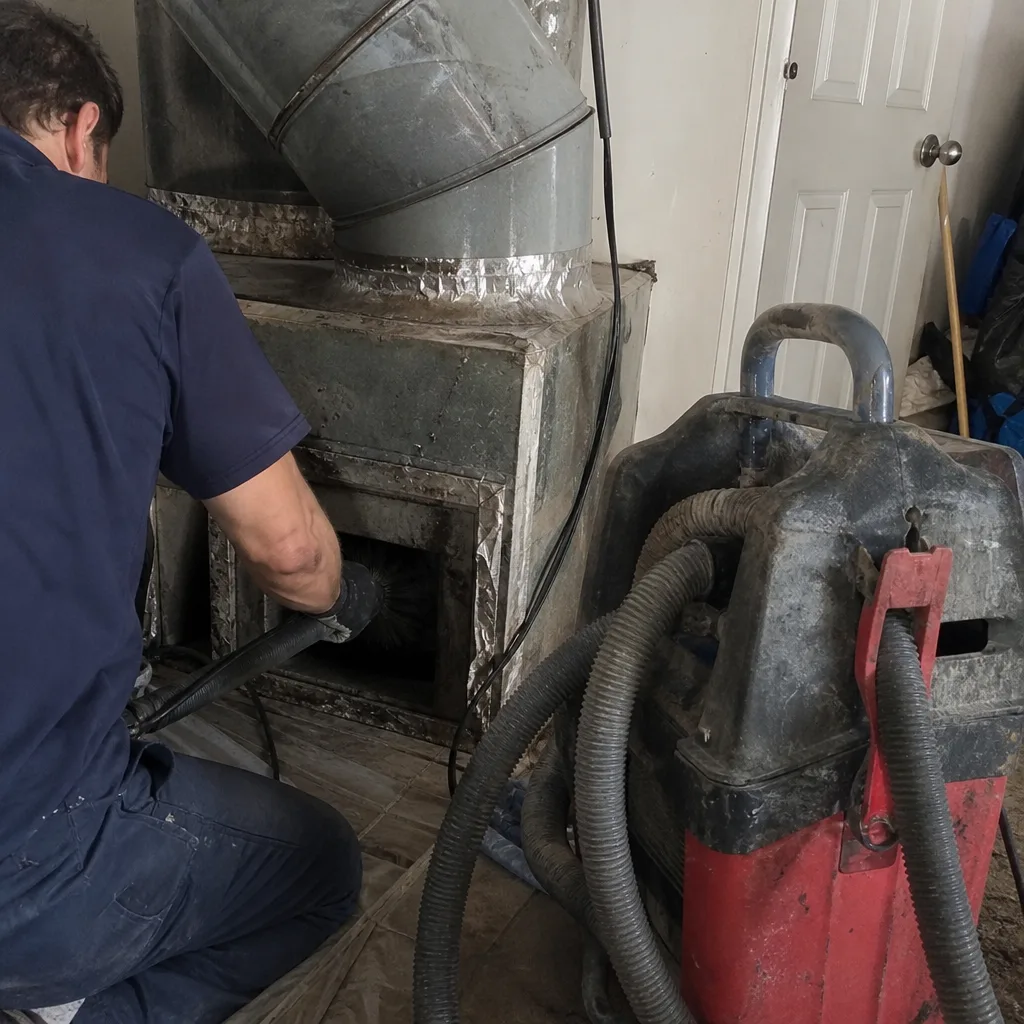 Before
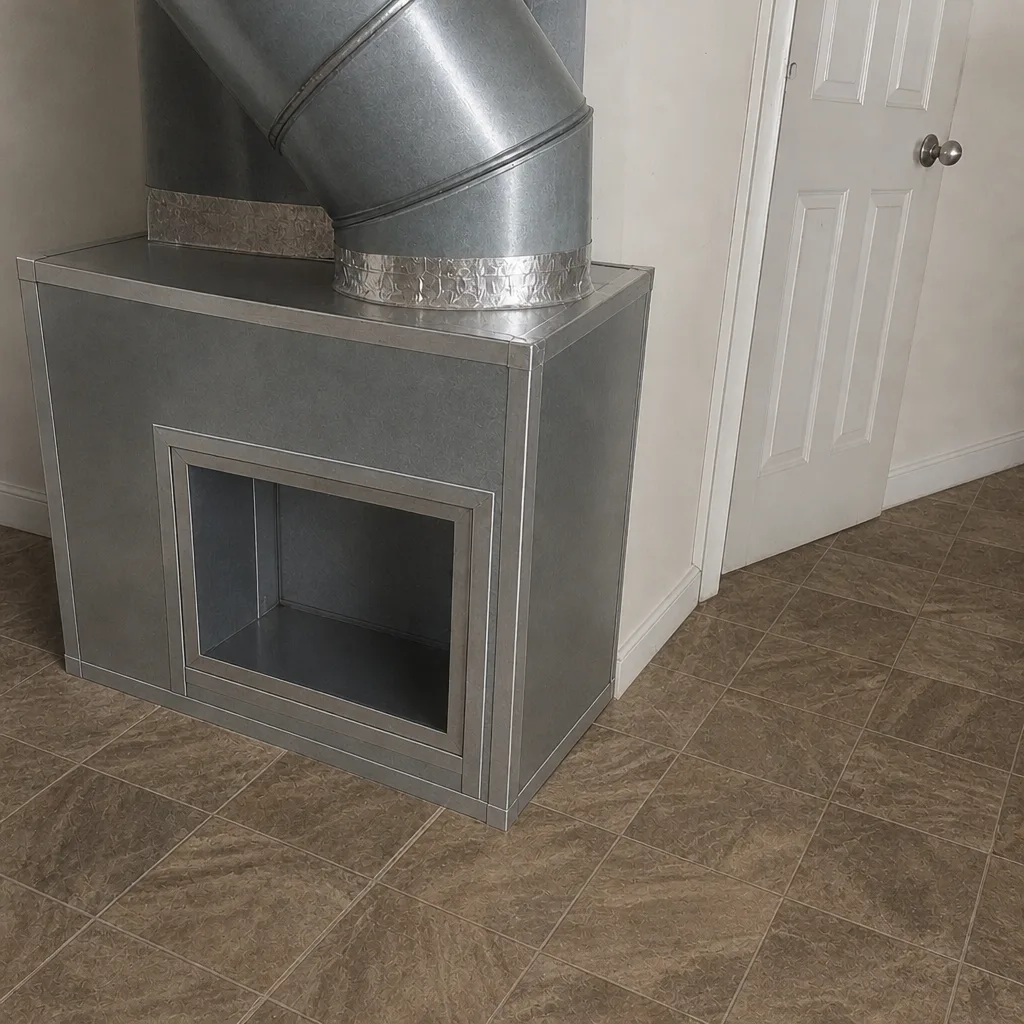 After
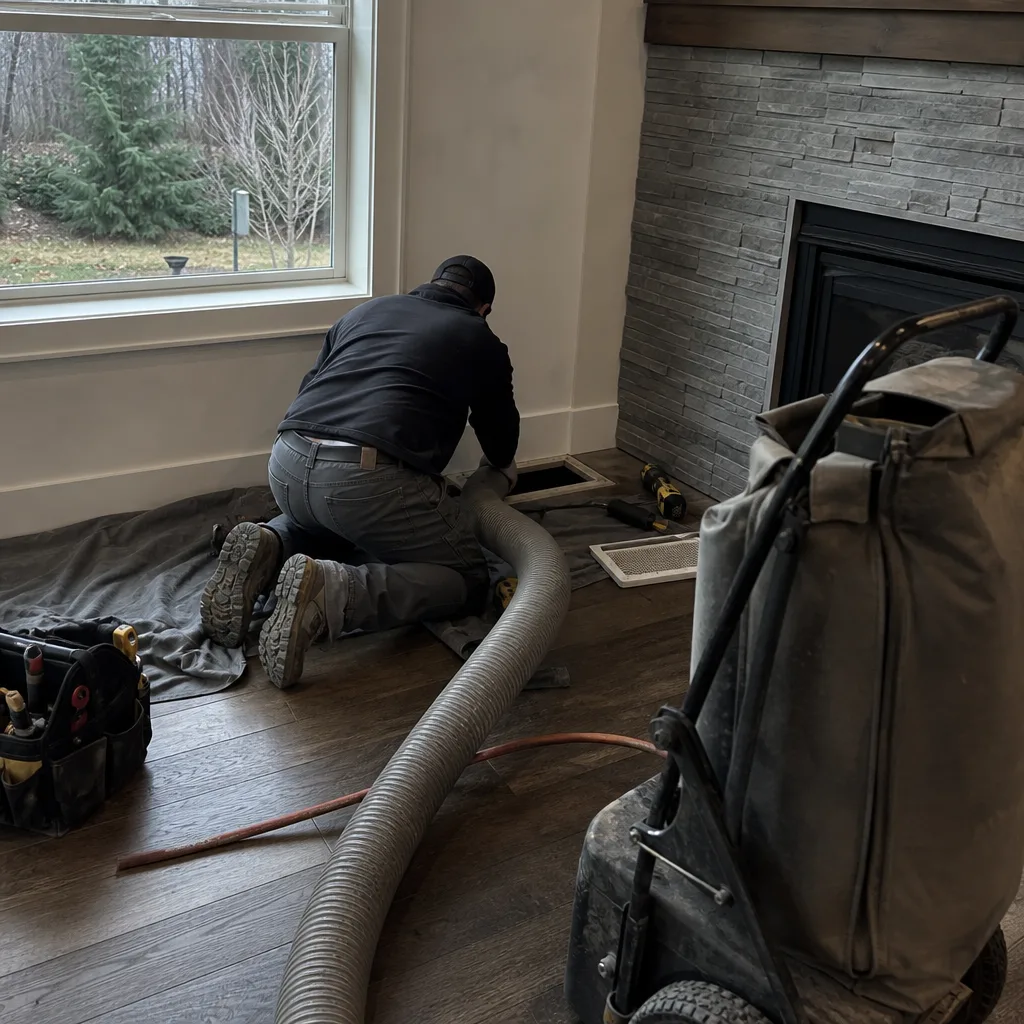 Before
 After
When to Call a Professional
Call a professional when you’ve got visible debris blowing out of registers, a return that’s pulling air from a crawlspace instead of the room, or an ongoing dust problem that cleaning the filter doesn’t fix. Call when a home inspector has flagged unpermitted duct work and you need it corrected and documented before a sale closes. Call when a heating or cooling contractor has quoted a repair and you want a second look before signing. And call when allergies or asthma in the household have you wondering whether the air coming out of the registers is part of the problem. None of these are DIY territory. Duct systems are how the air in your home gets distributed, and closing one up wrong can be worse than leaving it alone.
Duct Cleaning Bellevue offers free estimates in Bellevue. Call (833) 454-4523 to schedule one. Our technicians have up to 14 years of experience with residential and light-commercial duct systems, we use commercial-grade Rotobrush, Nikro, and Abatement Technologies equipment, and we do not begin work without a written scope and a flat price you’ve agreed to.
Frequently Asked Questions
No. Cleaning the interior of an existing duct system in Bellevue is maintenance work and does not require a permit or an inspection. Permits apply to repair, alteration, or replacement of ductwork, not to cleaning it.
Usually yes, if the work modifies the mechanical system. Replacing a duct section, rerouting a run, or adding or resizing a supply or return is mechanical alteration under WAC 51-52 and generally requires a permit from the city and a licensed mechanical contractor. A simple reseal may or may not depending on scope, so confirm with the City of Bellevue before work starts.
It gets flagged in the inspection report and becomes a negotiating issue. The seller either produces documentation or pays a licensed contractor to correct and permit the work during the transaction, which is the most expensive and least convenient time to schedule it. Call (833) 454-4523 if you want an independent look before you make a decision on the house.
Ask for the Washington contractor registration number and the license number for mechanical work, then verify both with the state. Cleaning doesn’t require a mechanical license; repair does. A company that does both should be able to produce the numbers on request.
Only when an inspection finds a specific failure: a disconnected joint, a crushed or torn run, a sagging trunk, or a boot that’s pulled loose. There’s no fixed schedule. Cleaning is about the contents of the duct; repair is about the duct’s physical integrity, and they’re evaluated differently. A qualified technician inspects before cleaning and reports what they find.
Pricing is per job by written estimate, not per vent and not from a teaser coupon figure. The right way to compare is to get two or three written scopes for your specific system and look at what’s included: containment equipment, before-and-after photos, whether repair findings are documented separately, and whether permit work is clearly itemized. Call (833) 454-4523 for a free estimate.
You can also read more about our cleaning process on our Duct Cleaning Bellevue page, or explore how we approach Bellevue homes specifically.
The Bottom Line
Cleaning your ducts in Bellevue doesn’t require a permit, and a company that handles cleaning-only is doing maintenance work. The trouble starts when the same visit crosses into repair without a permit, a license, or a paper trail. That’s an unpermitted mechanical modification, and it surfaces at resale in the worst possible way. Know the line: cleaning is one thing, cutting and replacing duct is another. Ask every contractor for the license number, the permit path, and a written scope that separates cleaning from repair. Ask for before-and-after photos of your own ducts, and ask what equipment will be on site. Do that, and the duct work in your home stays as easy to document as it is to live with.
If you want a straight read on your system, call (833) 454-4523. We answer 24/7. Fast dispatch from 7am to 7pm, Sunday through Friday. Estimates are free, the price is set per job by the written estimate, and we’ll tell you plainly whether what you need is cleaning, repair, or both.
Written by the team at Duct Cleaning Bellevue.