
Last updated November 15, 2026
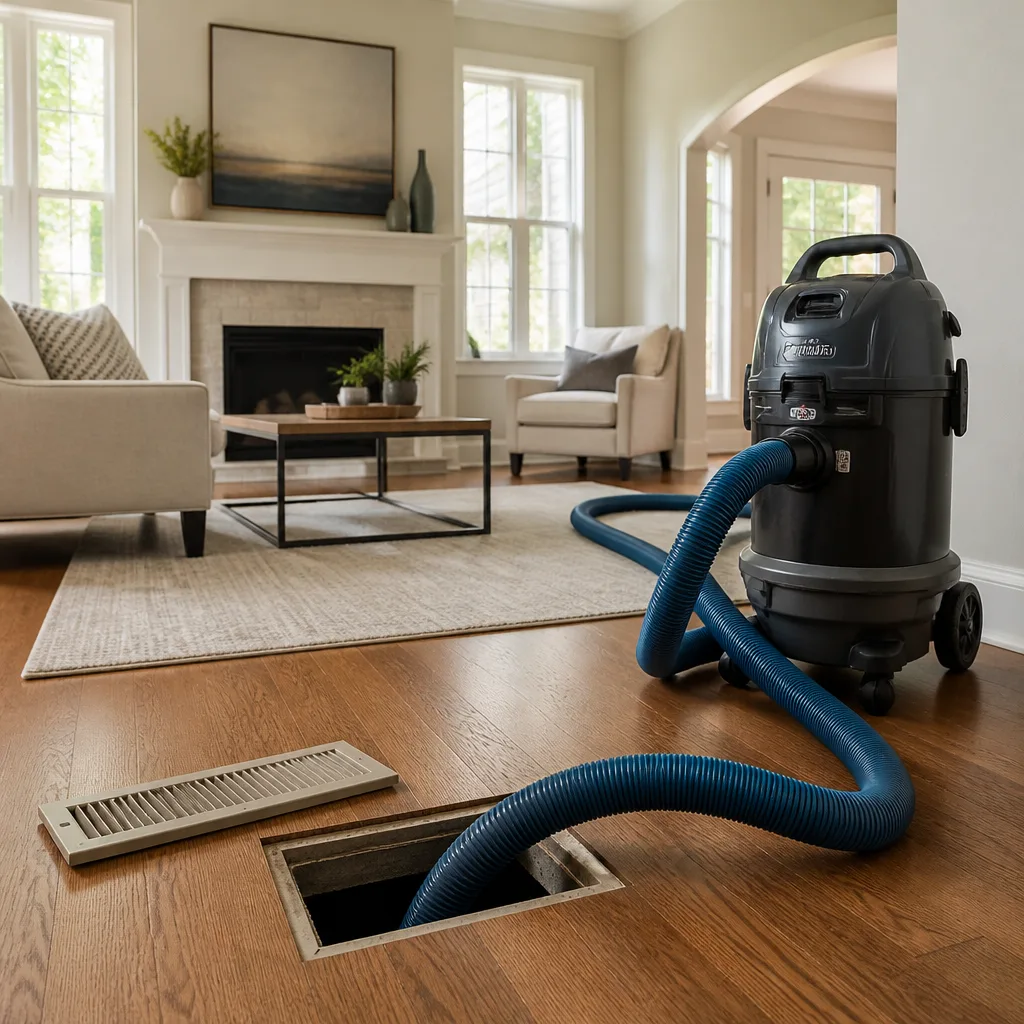 Whole-home duct cleaning
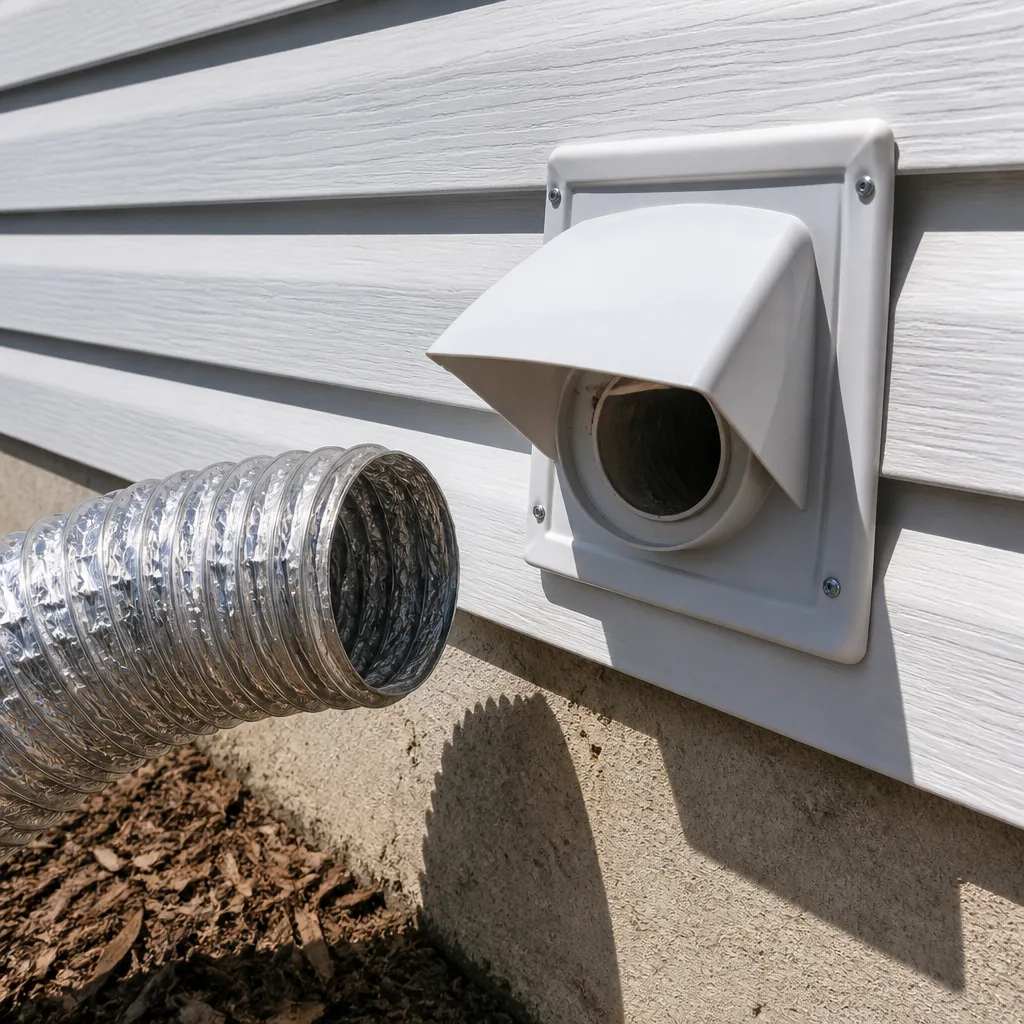 Dryer vent cleaning
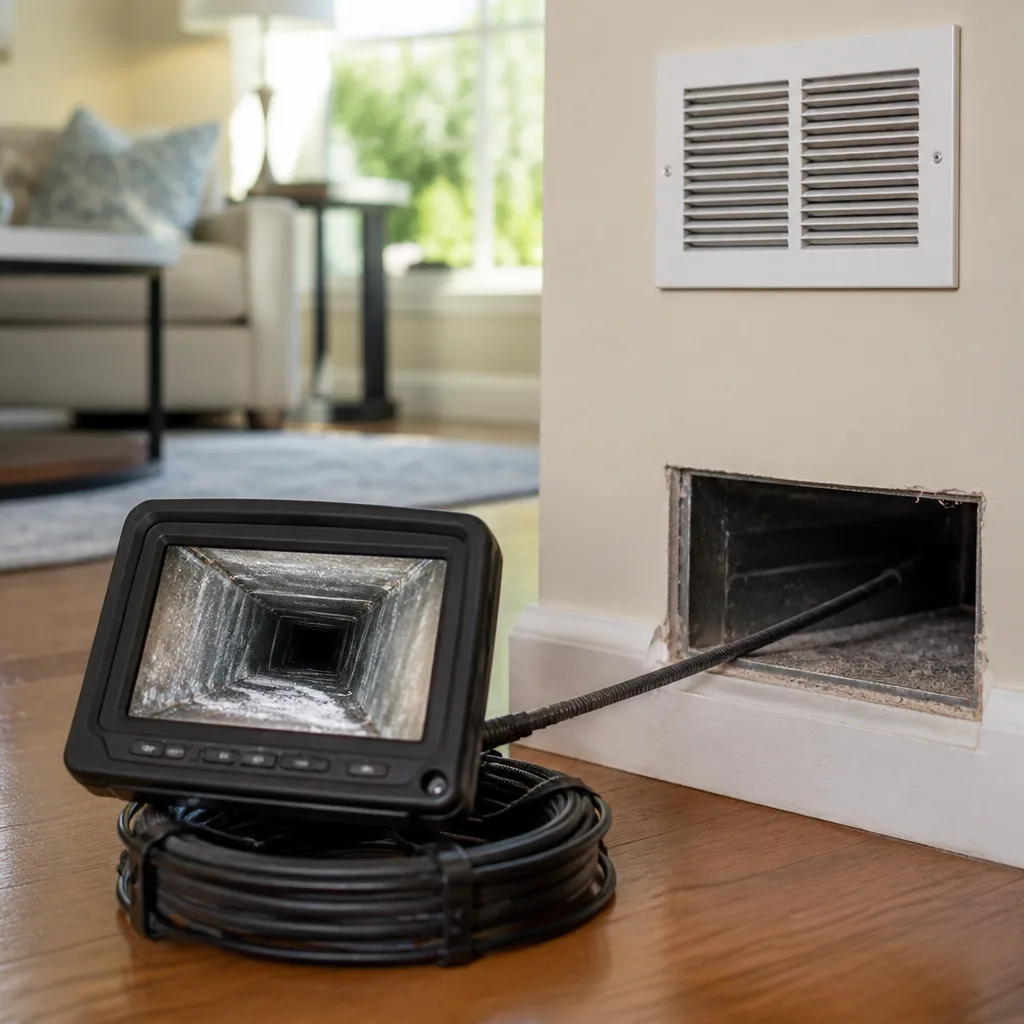 Camera inspection
 Sanitizing & deodorizing
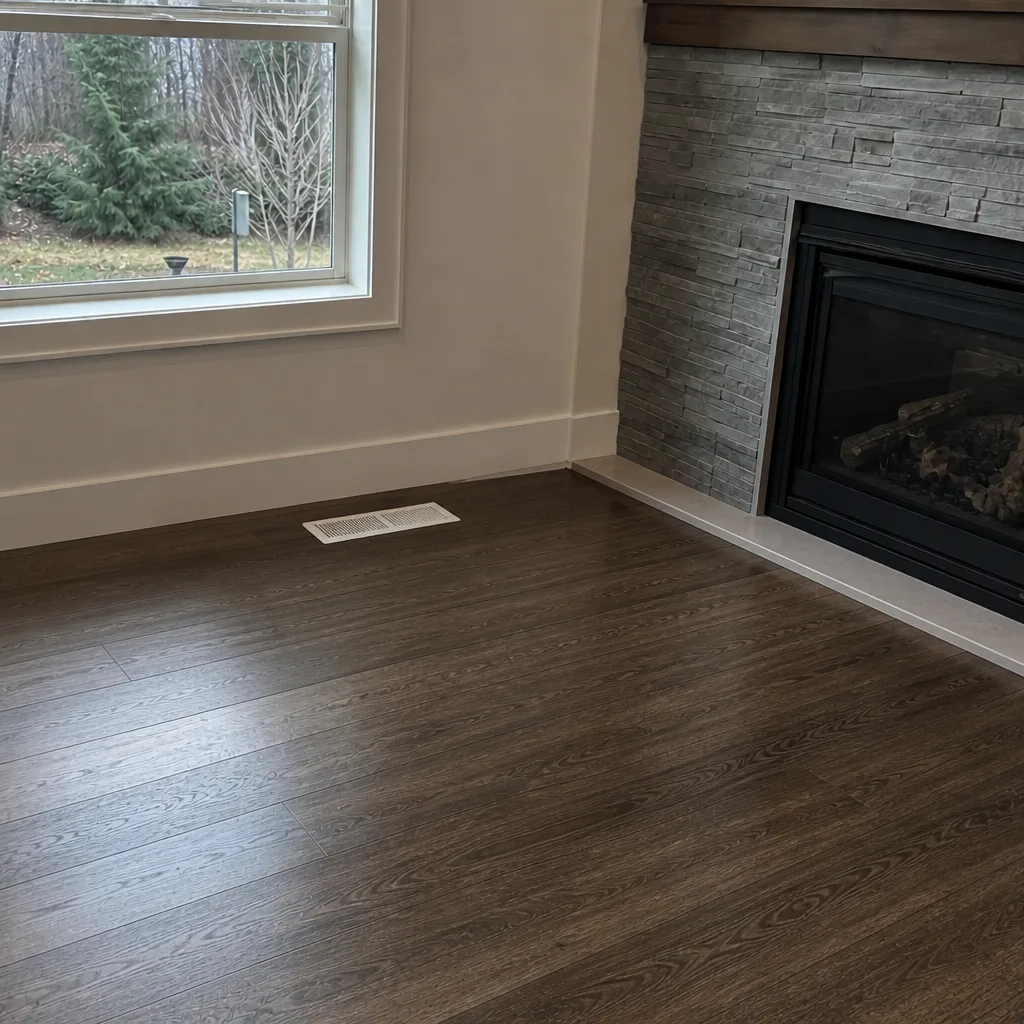
Whole-system duct and dryer vent check with before-and-after photos - you see exactly what came out of your vents
That "$99 whole-house special" is a bait ad - the real number appears once they are in your hallway, or the "clean" is a shop-vac at the register. We photograph the inside of your ducts before and after instead.
Air Duct Cleaning Emergency Preparedness Guide for Bellevue Homes
Most duct cleaning advice assumes the problem is dust. In Bellevue, the bigger problems arrive in bursts: a smoke event that pushes the Air Quality Index into unhealthy territory for days, a burst pipe or sump failure that soaks a crawl space, or a seismic jolt that shifts the framing around your ductwork without cracking a single window. Each of those events contaminates a duct system in a different way, and each one demands a different response. Treat them all like “just get the ducts cleaned” and you’ll either spend money on the wrong fix or wait too long on the right one. This guide walks through how wildfire smoke, water intrusion, and earthquake movement actually affect the ducts in a Bellevue home, what to do in the first hours and days, and how to prepare now so a future event costs you less.
Quick Answer
After a Bellevue emergency, duct work needs to match the event. Wildfire smoke leaves fine particulate embedded in fiberglass liner and insulation that ordinary brushing won’t fully remove, so it needs HEPA-rated extraction with containment. Flooding gives you roughly 72 hours before moisture in ductwork turns into mold and structural breakdown, and badly saturated duct board often has to be replaced rather than cleaned. Earthquake movement can separate duct joints behind walls, which pulls crawl space and attic air into your supply lines. In every case, document the condition with photos before anyone touches the system.
Styles & brands we work with
- Whole-home duct cleaning
- Dryer vent cleaning
- Camera inspection
- Sanitizing & deodorizing
Table of Contents
- Wildfire Smoke and Duct Contamination in Bellevue
- After Water Intrusion: The 72-Hour Window
- Earthquake Damage and Hidden Duct Separation
- Pre-Emergency Preparation for Bellevue Homes
- Documenting Duct Condition for Insurance Claims
- What Proper Emergency Duct Work Actually Involves
- Common Mistakes to Avoid
- Frequently Asked Questions
Wildfire Smoke and Duct Contamination in Bellevue
Wildfire smoke doesn’t behave like household dust, and that difference matters for how you clean it out. Smoke particulate is extremely fine, often small enough to stay airborne for hours and to pass through standard filters before settling. When Bellevue homeowners run their HVAC systems with the windows shut during a smoke event, that’s usually the right call for indoor air quality in the short term. The trade-off is that the system keeps circulating the same fine particulate through the return side, and it settles into every surface it touches, including the interior walls of your ducts.
The surfaces that cause trouble are the porous ones. Fiberglass duct liner, flex duct with an internal liner, and any exposed insulation in a plenum absorb smoke the way a sponge absorbs water. The odor compounds and the fine ash bind to those fibers. A shop-vac and a brush will knock down what’s sitting loose, but it won’t pull particulate out of the liner. That’s why some Bellevue homes still smell like a campfire months after a smoke event has passed, even after a “cleaning.”
What smoke remediation actually requires
Effective smoke removal is a capture problem first and a scrubbing problem second. In our experience, the systems that hold up best use mechanical agitation to loosen material from duct walls while a HEPA-rated vacuum pulls it into containment at the same time. Nikro HEPA equipment captures particulate at the level that matters for fine smoke ash. Abatement Technologies containment equipment keeps dislodged material from drifting back into living space while the work is happening. The combination matters more than any single tool.
- Mechanical agitation lifts smoke-bound particulate off duct walls and out of liner fibers.
- HEPA extraction running simultaneously captures what’s loosened before it settles again.
- Containment and negative pressure keep the loosened material out of the rooms you’re standing in.
- Filter review matters afterward: a Honeywell or Aprilaire filtration setup sized correctly for the system gives you a better line of defense next smoke season than a standard fiberglass filter.
One more Bellevue-specific note: the neighborhoods closest to the Cascade foothills, including areas up the hill toward Cougar Mountain and the eastern edges of the city, tend to see smoke settle and linger a little longer on still days. If your home sits on a slope with a lot of surrounding vegetation, expect the smoke exposure to be more persistent than a downtown condo would see.
After Water Intrusion: The 72-Hour Window
Water in a duct system is a countdown, not a cleanup problem. Mold can begin establishing on wet duct surfaces within about 72 hours, and porous materials like duct board and fiberglass liner give it an ideal substrate. That window is the single most useful number to hold onto after a burst pipe, an appliance leak, a failed sump, or any flooding event in a Bellevue home. Everything you do in those first three days either saves the ductwork or condemns it.
What moisture does inside ductwork if you miss the window
Once mold establishes on duct liner or duct board, it doesn’t stay put. Every time the system runs, spores move into the supply air and into the rooms it serves. Porous duct materials can’t be cleaned back to a safe condition once the growth is established inside the fiber. Cosmetic treatment doesn’t reach it. At that point the realistic answer is replacement of the affected sections, which is a bigger and more expensive job than the cleaning that would have handled it in the first 72 hours.
When cleaning beats replacement, and when it doesn’t
The right call depends on what got wet and how fast it dried.
- Sheet metal ductwork that got damp can often be cleaned, disinfected, and dried if it’s addressed early. Metal doesn’t absorb water.
- Flex duct with internal liner that took on water is usually a replace. The liner holds moisture and can’t be reliably dried from the inside.
- Duct board or fiberglass-lined plenums that stayed wet are almost always a replace once growth has started.
- Any duct carrying visible mold growth needs to come out rather than be cleaned over.
The practical rule for Bellevue homeowners: if water reached your ducts, get eyes on it in the first 24 hours. A wet crawl space under a Bellevue home after heavy rain is the most common pathway into ductwork, and the moisture can travel along the duct jacket before anyone notices a leak inside the house. Our contamination-first approach is one reason we use Abatement Technologies containment equipment on water-damaged jobs: it keeps debris and spores contained while affected sections are removed.
Earthquake Damage and Hidden Duct Separation
A seismic event doesn’t have to damage your walls to damage your duct system. Duct runs pass through framing, over crawl spaces, and through attics, and the joints that connect them are designed for a house that stays put. Even a moderate shaking event can open gaps at flex connections, separate duct sections, or pull a boot away from a floor register. Those gaps don’t look dramatic. They don’t leak water. What they do is quietly pull unfiltered air from a crawl space, an attic, or a wall cavity straight into your supply air.
That’s a hidden indoor air quality hazard, and it’s the kind of problem that gets worse the more you run the system. In a Bellevue home with a crawl space, the air being pulled in through a separated joint can carry soil particulate, moisture, and whatever else has collected down there. If your home has an attached garage, the same problem can pull in vehicle exhaust fumes.
How to assess duct integrity after a seismic event
- Look for obvious clues first. Displaced floor registers, gaps at ceiling grilles, or duct runs that visibly shifted are signs the system needs inspection.
- Check for new dust streaks or soot at supply registers. A streak around a register often means air is being drawn in through a nearby gap.
- Note any new odors, especially a musty or earthy smell when the system runs. That usually points to crawl space air being pulled in.
- Have the accessible duct runs inspected before running the system for long. That includes the attic, crawl space, and any basement mechanical space.
- Address separated joints and disconnected boots before cleaning. Cleaning a system with open joints just pulls debris into it.
This is the repair side of the work, and it’s the part most duct cleaners don’t handle. We repair what others walk past: separated joints, disconnected boots, crushed flex runs, and torn insulation get fixed as part of the same visit as the cleaning, so the system you’re left with is actually sealed and functional.
Pre-Emergency Preparation for Bellevue Homes
You can’t schedule an emergency. You can prepare for one. A handful of prep steps done now make a real difference in how much a future smoke event, flood, or seismic event costs you in duct work.
- Get your ducts cleaned and inspected now, before the event. A clean, sealed system has less material to absorb smoke and less debris to become the food source for mold if water gets in.
- Fix every compromised duct run you can find. Sealed joints keep crawl space air out during normal operation and keep contaminated air from moving into living space after a seismic event.
- Upgrade filtration and know what you have. A properly sized filtration setup using Honeywell or Aprilaire components gives you a real defense during AQI events. Have it serviced so it performs when you need it.
- Know where your system is vulnerable. Locate the duct runs in your crawl space, attic, and mechanical room. Knowing where they are is what lets you check them quickly after a seismic event or a water intrusion.
- Photograph your duct system as it is today. A baseline set of photos taken in a clean, undamaged condition is exactly what an insurance adjuster wants to see when you file a claim later.
- Schedule dryer vent cleaning. A clogged dryer vent is one of the leading causes of residential fires. Keeping it clear is a fire-prevention step that has nothing to do with emergencies on paper and everything to do with them in practice.
Prep work here is low-effort compared to remediation. Getting it done in a calm month is far cheaper than getting it done after smoke has settled into duct liner or water has sat in a crawl space for a week.
Documenting Duct Condition for Insurance Claims
If a qualifying event damages your duct system, the documentation you have before work begins is what determines whether the claim gets paid. Adjusters need to see the condition of the system, not the condition it’s in after remediation. That means photos and a written report taken before anything gets cleaned or replaced.
What to document before work begins
- Wide shots and close shots of every accessible duct run, including the crawl space, attic, mechanical room, and any registers that visibly shifted or show damage.
- Photos of water intrusion: moisture staining on duct jackets, standing water near duct runs, and any visible mold on duct surfaces.
- Photos of separated connections, torn flex duct, or crushed runs, ideally with something in the frame for scale.
- Photos of the filter and its condition at the time of the event. Smoke- and water-damaged filters support the contamination claim.
- A written scope from the contractor that describes what was found, what the recommended remediation is, and why replacement is recommended over cleaning if that’s the case.
- The date of the event and the date of inspection, so the timeline is clear.
Before starting a claim, ask your insurer what they need and in what format. Then have the duct system inspected and documented before any work begins. Once remediation starts, the “before” evidence is gone, and the claim gets harder to support. We can work with your insurer on documentation, and the inspection and written estimate come before any equipment goes into the system.
What Proper Emergency Duct Work Actually Involves
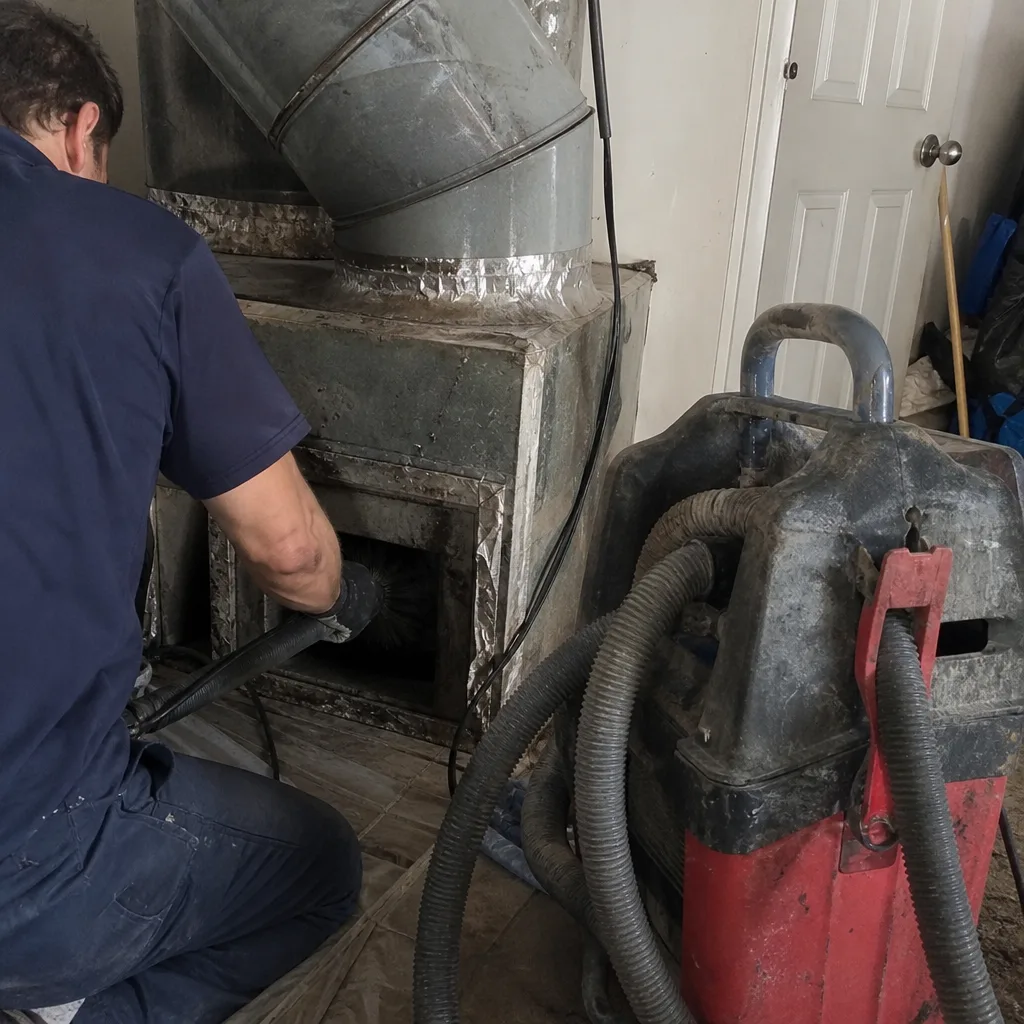
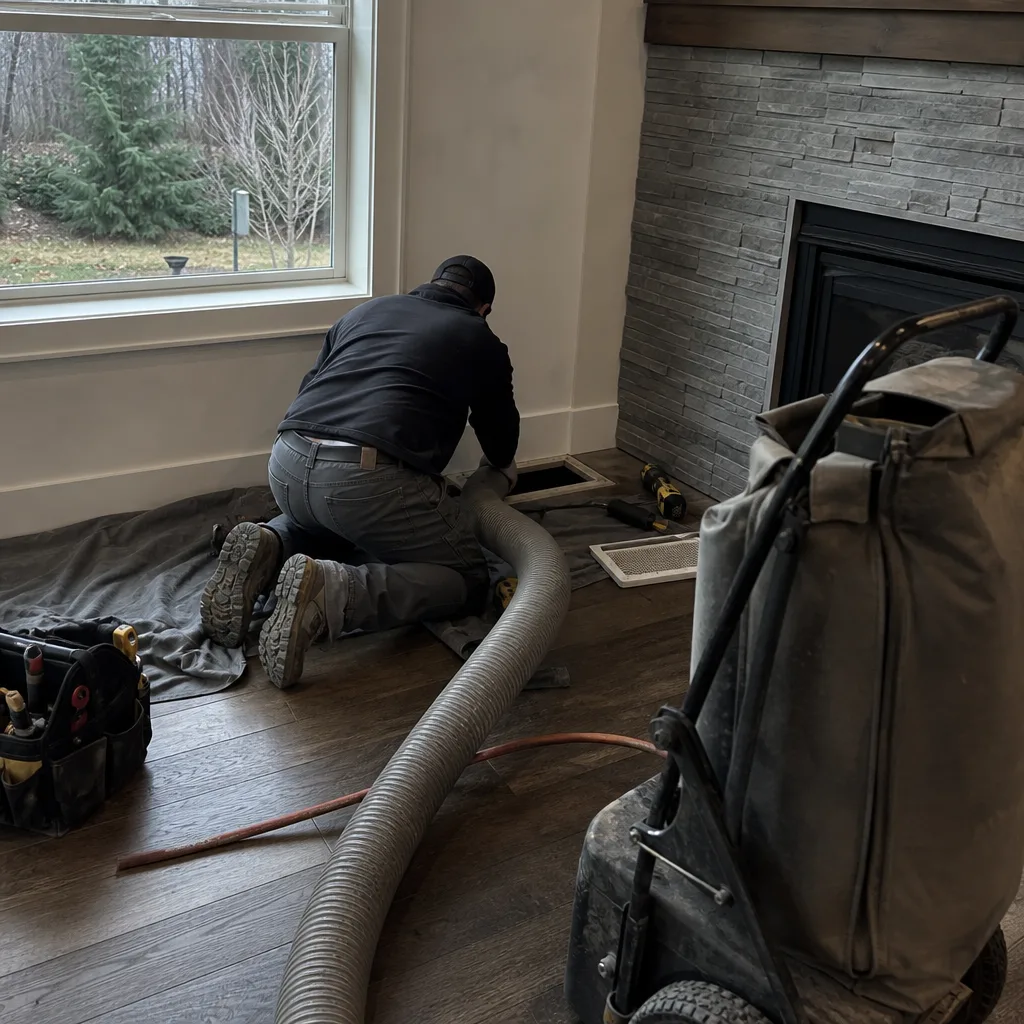
The difference between a real remediation and a cosmetic one usually comes down to the equipment. A consumer-grade shop vac with a weighted hose doesn’t create the airflow needed to pull fine smoke particulate out of duct liner, and it doesn’t capture what it loosens. It moves debris around inside the system. Commercial-grade equipment brought to your home is a different category of work.
- Rotobrush rotary brush systems handle the mechanical agitation side: the rotary brush scrubs duct walls and liner surfaces while the vacuum extracts what’s loosened, at the same time.
- Nikro HEPA-rated equipment captures particulate at the level fine smoke ash and mold spores require.
- Abatement Technologies containment keeps dislodged material under negative pressure and out of living space. Contained at the source is the goal on every job, and it matters most after an emergency.
- Honeywell and Aprilaire filtration components let us upgrade your system’s defenses as part of the same visit, rather than leaving you with a clean system and the same weak filtration.
- Dryer vent cleaning runs on the same equipment logic and gets handled as a core service, not as an add-on.
Clean ducts start with the right equipment. If a quote for emergency duct work doesn’t specify what equipment will be used, that’s a fair question to ask before you book. We use Rotobrush, Nikro, Abatement Technologies, and Guardsman equipment across our air duct cleaning and repair work, and we’re a knowledgeable resource for Honeywell and Aprilaire setups when filtration comes up.
Common Mistakes to Avoid
- Treating a smoke event like a dust problem. Fine smoke particulate embeds in porous liner. Brushing alone leaves it there, and the odor comes back. Insist on HEPA extraction with containment.
- Waiting past 72 hours after water reaches your ducts. After that window, mold has established, and cleaning won’t get porous materials back to a safe condition. You’re looking at replacement.
- Running the HVAC system after an earthquake before checking duct integrity. A separated joint in a crawl space is pulling unfiltered air in every time the system runs. Check first, run second.
- Hiring based on price alone after an emergency. Low-price quotes after a smoke or flood event are often shop-vac work dressed up as remediation. Ask what equipment will be used and what gets cleaned versus replaced.
- Skipping documentation and letting work start. Once the remediation begins, the evidence your adjuster needs is gone. Document first, then work.
- Cleaning a duct system with open joints or disconnected runs. Cleaning a broken system leaves the root problem behind. Repair gets done as part of the visit, not afterward.
- Ignoring the dryer vent during an IAQ audit. A clogged dryer vent is a documented fire risk, unrelated to smoke or water damage and easy to fix while the technician is already on site.
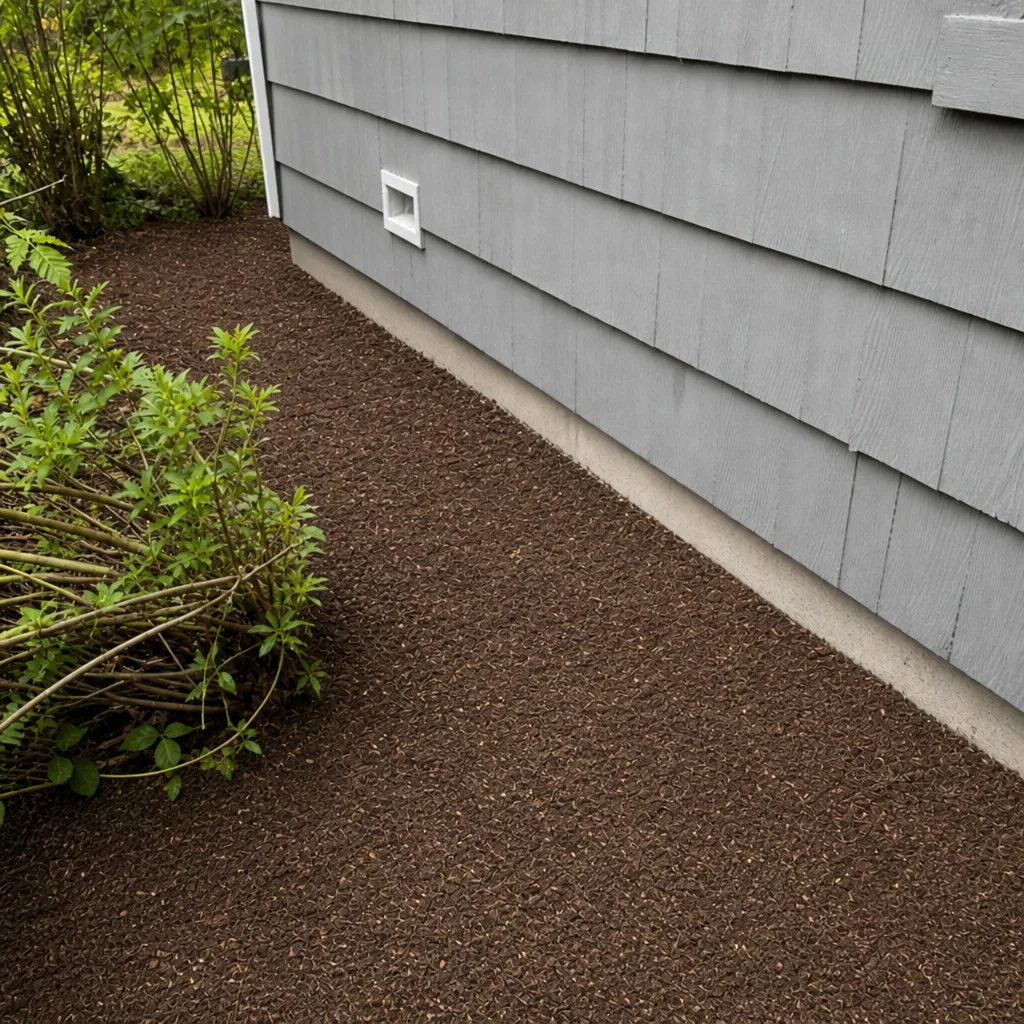
See the difference
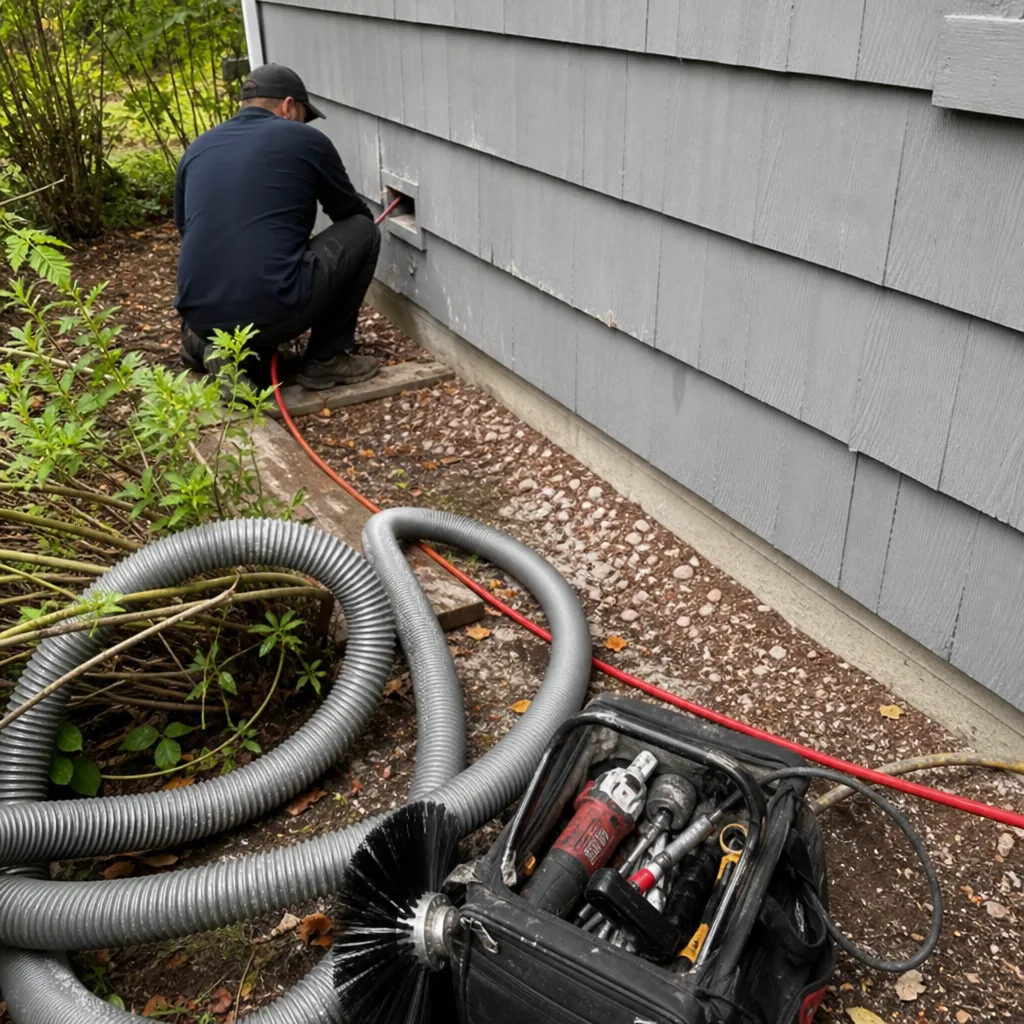 Before
 After
 Before
 After
 Before
 After
When to Call a Professional
Call a professional if smoke odor persists after a smoke event and the system has been running, especially when Bellevue AQI readings were in unhealthy territory for multiple days. Call after any water intrusion that reached the ducts, crawl space, or mechanical room, and don’t wait a week to do it. Call after a seismic event if any registers shifted, if you smell musty or earthy odors when the system runs, or if the ducts run through a crawl space and you haven’t had the system inspected. And call before an event if you want the prep work done: cleaning, repair, and dryer vent service, done now, is worth more than an emergency response later. Duct Cleaning Bellevue offers free estimates in Bellevue. Call (833) 454-4523. We answer 24/7. Fast dispatch from 7am to 7pm, Sunday through Friday.
Frequently Asked Questions
Air duct cleaning in Bellevue after an emergency typically runs in the same range as a standard whole-system cleaning, with the final price set by the written estimate after the system is inspected. Remediation that involves repair, containment work, or replacement of damaged duct sections is priced per job based on what was found. We don’t quote per-vent prices, and there’s no coupon figure that turns into a bigger invoice once the technician is on site. One flat price per system, agreed before work starts, with before-and-after photos of your own ducts. Call (833) 454-4523 for a free estimate.
Cheap quotes are usually cheap because the equipment and the scope are smaller. A shop-vac and a brush can knock down loose debris, but they can’t pull fine smoke particulate out of duct liner or hold containment during the work. Those quotes often leave the actual contamination behind and leave damaged duct sections in place. Ask what equipment will be used, whether containment is part of the job, and whether the quote covers repair of compromised runs. Call (833) 454-4523 for a straight answer on what your system actually needs.
Metal ductwork that took on smoke can usually be cleaned, but porous duct liner, flex duct with internal liner, and duct board that absorbed smoke for days may not come fully clean. Once smoke compounds bind into those fibers, extraction removes some but rarely all of it. If odor persists after a proper HEPA extraction, replacement of the affected sections is often the honest answer. That determination has to be made by inspecting the actual system, and we’ll tell you which category your ducts fall into. Call (833) 454-4523 to schedule an inspection.
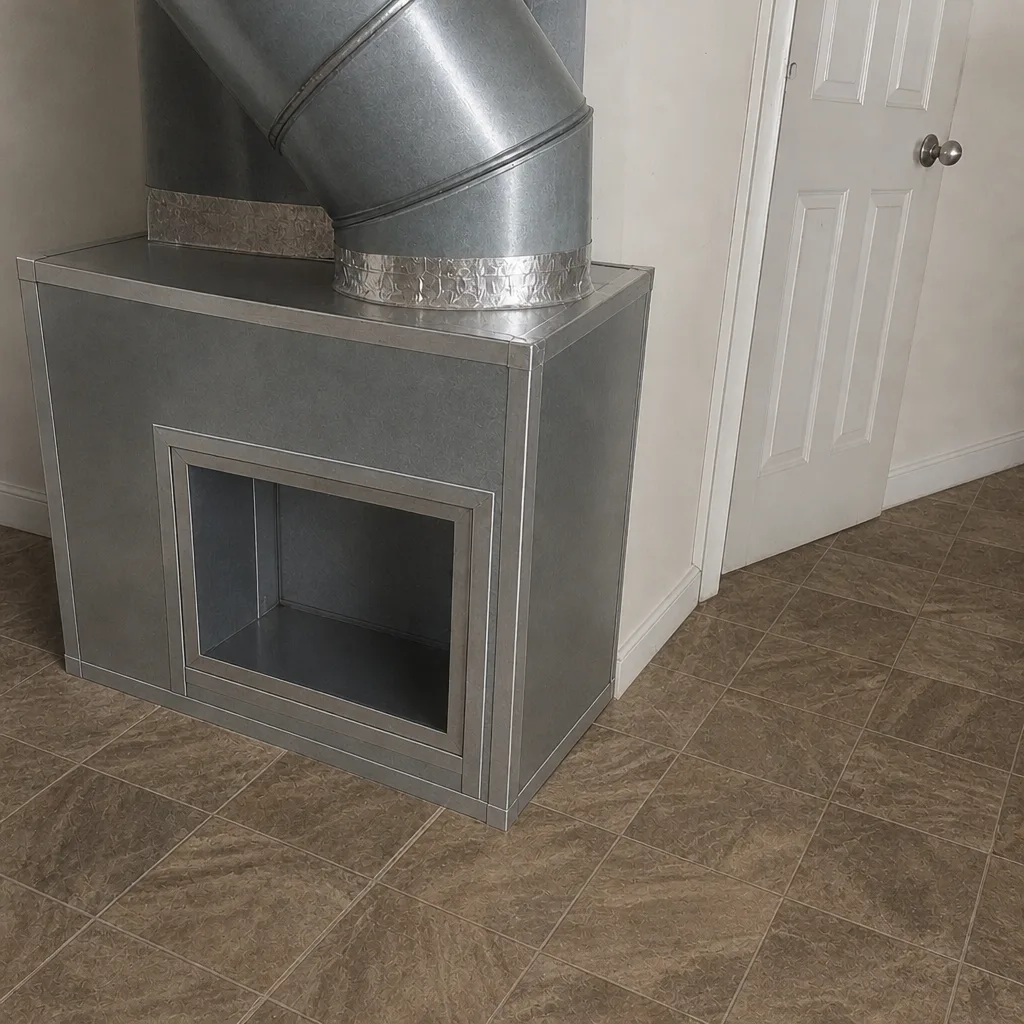
You should see before-and-after photos of your own ducts, not stock images, and you should be able to see the equipment brought to the job. With our work, you’ll see Rotobrush rotary brush systems for agitation, Nikro HEPA extraction, and Abatement Technologies containment, and you’ll get documentation of the condition of the system before and after. If a joint was separated, you’ll see the repair. If a filter was upgraded, you’ll see the Honeywell or Aprilaire component in place. Call (833) 454-4523 for a free estimate and a clear explanation of what’s included.
Most Bellevue homes do fine with a cleaning every few years, but emergency events reset the clock. A smoke event with AQI in unhealthy territory for days, a water intrusion that reached the ducts, or a seismic event with suspected separation all justify an inspection right away regardless of when the last cleaning was done. Homes with family members who have allergies or respiratory sensitivities often benefit from scheduling on a tighter interval. Call (833) 454-4523 to talk through your situation and get an honest recommendation.
Stop running the HVAC system and start drying the space as quickly as possible, then get eyes on any duct runs in the crawl space within the first 24 hours. The 72-hour window before mold establishes is real, and what gets done in the first day determines whether duct sections can be cleaned or have to be replaced. Document the condition with photos before anything is cleaned or moved. Call (833) 454-4523 as soon as you know water reached the ducts. We answer 24/7. A call outside dispatch hours is booked into the next opening, Sunday through Friday, 7am to 7pm.
The Bottom Line
Bellevue’s emergency risks are specific, and the duct response to each one is different. Wildfire smoke needs HEPA extraction with containment and a real look at porous liner. Water intrusion is a 72-hour countdown that usually ends in replacement if you miss it. Seismic movement opens joints quietly and pulls crawl space air into your supply lines. The response that ties all three together is the same: get the system inspected before you clean or run it, document the condition before work begins, and use equipment that captures what it loosens rather than moving it around. The 20% of this guide that points back to us: we handle cleaning, dryer vent service, and duct repair under one call, using commercial-grade equipment from Rotobrush, Nikro, and Abatement Technologies. One call covers cleaning, venting, and repair. Call (833) 454-4523 for a free estimate. We answer 24/7. Fast dispatch from 7am to 7pm, Sunday through Friday. And when you want to see the full range of what we handle across duct cleaning in Bellevue, the dryer vent cleaning and Bellevue pages lay it out.
Written by the team at Duct Cleaning Bellevue.