
Emergency Air Duct Cleaning Near Me: What Bellevue Homeowners Should Do First
If your ductwork just took on smoke, sewage, or something that died in it, calling a duct cleaner right away is usually the wrong first move. Before any truck pulls up, two things have to happen: you need to decide whether to shut the HVAC system down, and you need to document the contamination before anyone touches it. Skip either step and you can push contaminants deeper into the home or weaken an insurance claim. Here’s the sequence that actually protects you in Bellevue.
Most of what feels like a duct emergency has a short, calm checklist in front of it. If you’d rather not work through it alone, call (833) 454-4523. We answer 24/7.
Which Duct Problems Are True Emergencies in Bellevue?
Only three situations are genuine emergencies that call for shutting the system down immediately: an active fire or recent smoke event inside the home, water or sewage intrusion into ductwork or the air handler, and a dead animal or serious pest contamination inside the ducts. In all three, running the system circulates the problem through every room. In most other cases – musty odors, visible dust at registers, a single weak airflow room – the system can keep running, safely, until a scheduled visit. Turning everything off for a minor smell usually just leaves you uncomfortable for no reason.
Here’s how to triage quickly:
- Smoke or soot after a fire: shut the system off at the thermostat. Smoke residue is acidic and settles into duct lining; running air pushes it everywhere.
- Water or sewage near the air handler or in a crawl space: shut the system off. Moisture plus airflow is how mold colonizes ductwork fast.
- Dead animal or heavy pest activity: shut the system off. This is a contamination and odor event, and the source has to be removed before cleaning.
- Musty smell, dust, one cold room: leave the system on. Book a normal appointment. This is not an emergency.
One quick note: if you’re in a Bellevue home with ductwork in a vented crawl space, water intrusion there is the one you need to check first. It’s the most common hidden trigger we see on this side of the water.
What Do You Document Before Cleaning for an Insurance Claim?
Do not let anyone clean a smoke-, water-, or sewage-contaminated duct system until the damage is documented. Cleaning first and asking questions later is the single fastest way to lose an insurance claim in Bellevue. Your adjuster needs evidence of the contamination as it existed before remediation, and once the ducts are clean, that evidence is gone.
Document it in this order:
- Photograph everything before you touch it. Registers, duct openings, the air handler, any visible soot, water staining, or debris. Use your phone and keep the originals.
- Write down the trigger and the date. Fire, flood, sewage backup, pest event. Note when it happened and when you first noticed it in the ducts.
- Save the paperwork from the originating event. Fire department report, plumber’s invoice, water mitigation company’s report. These anchor the duct claim to the cause.
- Call your insurer before booking cleaning. Ask whether they want an adjuster inspection or an independent air quality assessment first. Some policies require it.
- Get the scope in writing from whoever cleans. What’s included, what equipment is used, and what containment method protects the rest of the house during the job.
If an insurer asks for professional documentation, a cleaning company that photographs before-and-after and provides a written scope is far more useful than one that hands you a receipt. That’s a fair question to ask on the phone.
What Should You Tell a Duct Cleaning Company When You Call?
The right things to say on the phone determine whether a duct cleaner can actually help you or needs to refer you to a mold or fire remediation contractor first. In our experience, most Bellevue homeowners call with “I think I need my ducts cleaned” and leave out the one detail that changes the answer. The cause matters more than the symptom.
Have these ready before you dial:
- The cause, not just the symptom. “We had a kitchen fire last week” tells us vastly more than “the house smells.”
- Whether the HVAC has been running since. On or off, and for how long.
- Where the contamination is visible. Which registers, whether the air handler is affected, whether it’s in a crawl space or attic run.
- Whether water is involved. Any moisture, staining, or musty smell means the answer might be remediation first, cleaning second.
- Whether there’s an active insurance claim. This tells us to prioritize documentation and a written scope.
- Type and age of the duct system, if you know it. Flexible duct, rigid metal, and older systems each handle contamination differently.
If a company can’t answer “how will you contain the debris during cleaning?” with a real method, keep calling. If the situation involves active mold growth or sewage saturation beyond the ducts themselves, a remediation contractor has to handle the affected building materials before duct cleaning makes sense.
Why Does Containment Equipment Matter More in an Emergency?
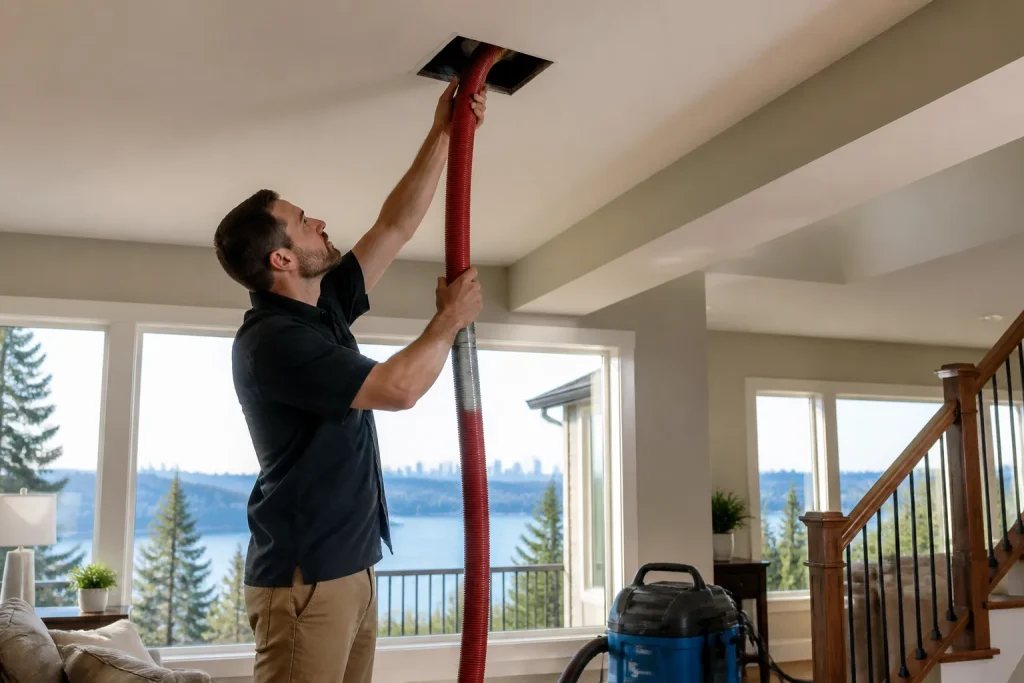
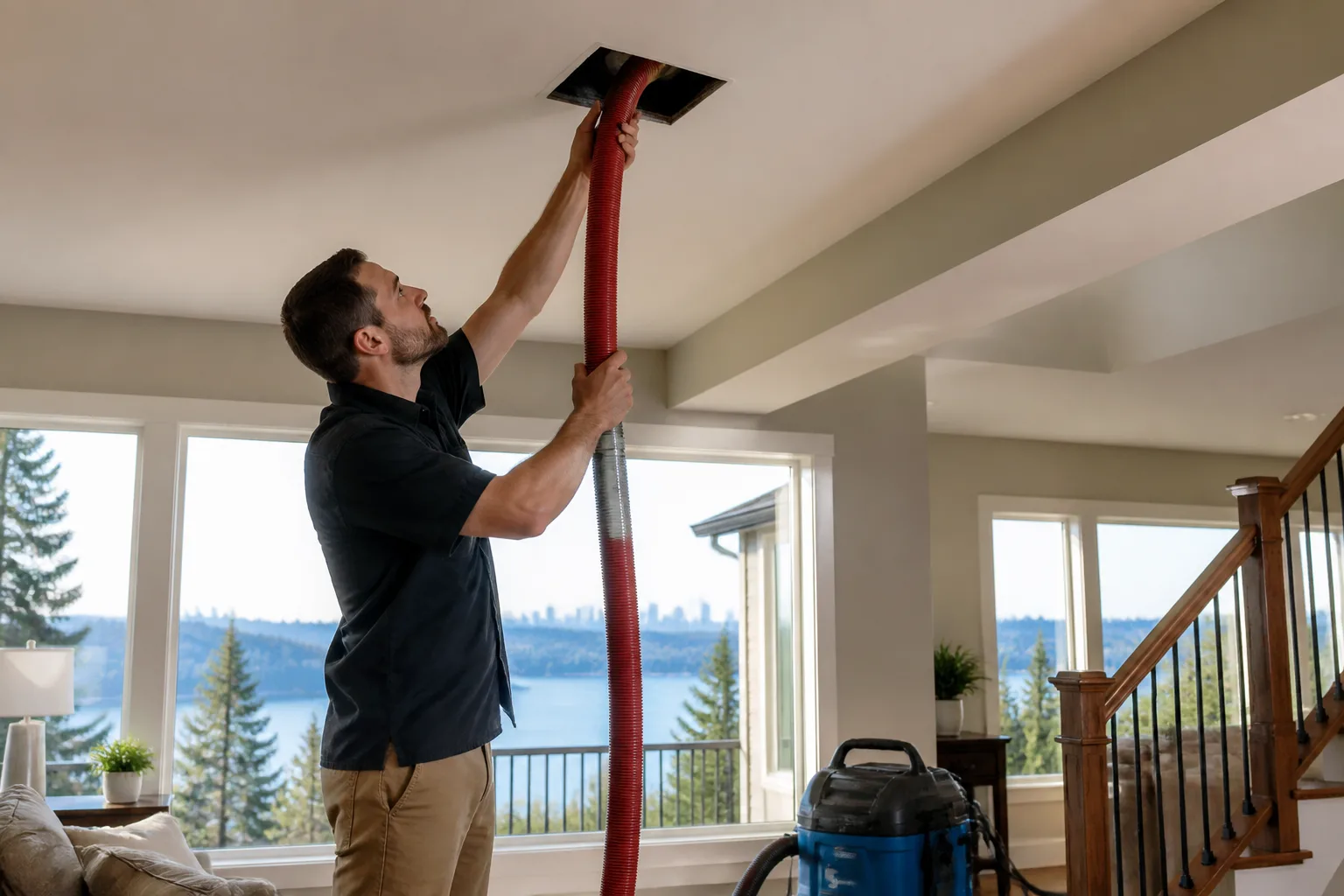
In an emergency, the contaminants are still active and airborne, so commercial-grade containment and negative pressure equipment matter more than at any other time. Loose soot, dried sewage particles, and pest debris don’t sit still. A consumer-grade shop vac hooked to a register can pull debris loose and blow the fine fraction back into the room. That’s not cleaning; it’s redistribution.
This is where Abatement Technologies equipment earns its place. It’s built for containment and negative air pressure during the job, so dislodged material is captured at the source rather than pushed through the home. Pair that with a Rotobrush rotary brush system for mechanical agitation and simultaneous extraction, and a HEPA-rated Nikro vacuum for certified-level particulate capture, and you have a process designed for exactly the kind of contamination that makes a call feel urgent. Clean ducts start with the right equipment, and it matters most when the contamination is at its worst.
One honest caveat: containment captures what’s inside the ducts during cleaning. It does not fix a duct system that’s torn, disconnected, or crushed. That’s why we also handle air duct repair – we repair what others walk past, rather than cleaning a broken system and leaving the root problem behind.
What Bellevue Triggers Cause Duct Contamination?
Bellevue has two local triggers that drive most emergency duct calls: wildfire smoke infiltration during late-summer smoke events, and water intrusion into crawl spaces where ductwork often runs. They require very different responses, and mixing them up wastes money.
Wildfire smoke infiltration is an air quality event, not a fire event. When regional smoke settles over Bellevue, fine particulates work into the home through gaps, returns, and open windows. The response is filtration and sealing first, cleaning second. That’s where we lean on brands like Honeywell and Aprilaire for filtration and air quality upgrades – a filter upgrade and return-air sealing often does more for smoke season than a cleaning visit alone. Cleaning is the follow-up when the ducts have actually collected residue.
Water intrusion in crawl spaces is the structural one. In Bellevue, plenty of homes run flex duct through vented crawl spaces, and a slow leak or a wet winter can leave that ductwork damp. Damp ductwork plus airflow is a mold problem waiting to happen, and it needs the moisture stopped and the ducts inspected before cleaning does any good. Dryer vent cleaning is the third trigger worth remembering – a clogged dryer vent is a documented fire risk, and it’s part of what we do, not an add-on.
If you’re trying to get a handle on the bigger picture of your system, our air duct cleaning page walks through what a full-system job involves.
When Should You Call a Pro Instead of Waiting?
Call a professional the same day if the system is off and you can’t safely confirm the cause, if smoke, water, sewage, or pest contamination is inside the ducts, or if anyone in the home has respiratory sensitivity and the air quality has clearly dropped. For allergies and asthma, delay isn’t worth the risk. For a minor musty smell with no active water, waiting for a scheduled appointment is fine.
When you do call, expect a free estimate and a flat price per system agreed before work starts – no per-vent pricing, no coupon that balloons on the invoice. That’s the industry bait-and-switch we’re allergic to. Ask for before-and-after photos of your own ducts, not stock images.
Related services in Bellevue
Beyond cleaning, we handle dryer vent cleaning and full duct repair, so one call covers cleaning, venting, and repair. If you want the full-service overview for Bellevue, start there.
The Bottom Line
Here’s the short version for Bellevue homeowners: shut the system off for fire, water, sewage, or pest contamination – leave it on for odors and dust. Document everything before anyone cleans, especially if insurance is involved. Tell the duct cleaner the cause, not just the symptom. And ask how they contain the debris during the job, because in an emergency, containment is the whole ballgame.
The rest of the work is choosing the right equipment and getting a flat price in writing before the job starts. Our technicians have up to 14 years of experience, and we’re licensed and insured. If you’re in Bellevue and need help, Duct Cleaning Bellevue offers free estimates – call (833) 454-4523. We answer 24/7. Fast dispatch from 7am to 7pm.
Frequently Asked Questions
Most residential duct cleaning is priced per system as a flat estimate, not per vent, and the written estimate sets the final price. Emergency-related cleanup (smoke, water, or pest contamination) can run higher than routine cleaning because it involves containment and documentation. Call (833) 454-4523 for an exact quote – estimates are free.
No. Shut the system off at the thermostat after a fire, water intrusion, or sewage backup near the air handler, because running it circulates smoke residue, moisture, or contaminants through the whole home. Leave it off until a professional inspects the ducts. Call (833) 454-4523 to book an inspection.
Cheap quotes usually skip containment or use consumer-grade vacuums, which can redistribute debris instead of capturing it. A fair quote reflects commercial-grade equipment and a written scope. Call (833) 454-4523 and ask what equipment and containment method they use – estimates are free.
For most Bellevue homes, routine cleaning every few years is plenty unless there’s smoke, water, pest contamination, or a household member with respiratory sensitivity. After an emergency event, cleaning should happen once the cause is fixed and documented. Call (833) 454-4523 to talk through your situation – estimates are free.
Written by the team at Duct Cleaning Bellevue.
Need Air Duct Cleaning Help?
Call Duct Cleaning Bellevue - licensed & insured, with free written estimates in Bellevue.
(833) 454-4523